17 Years Toronto PlumbingCSA B64.10 CertifiedWSIB & $2M CGLLicensed · Permitted · Rebate-FiledMost Installed
Interior Backwater Valve Installation in Toronto, ON | Under-Slab, Permitted & Rebate-Ready
· By The Backwater Valve Toronto Crew
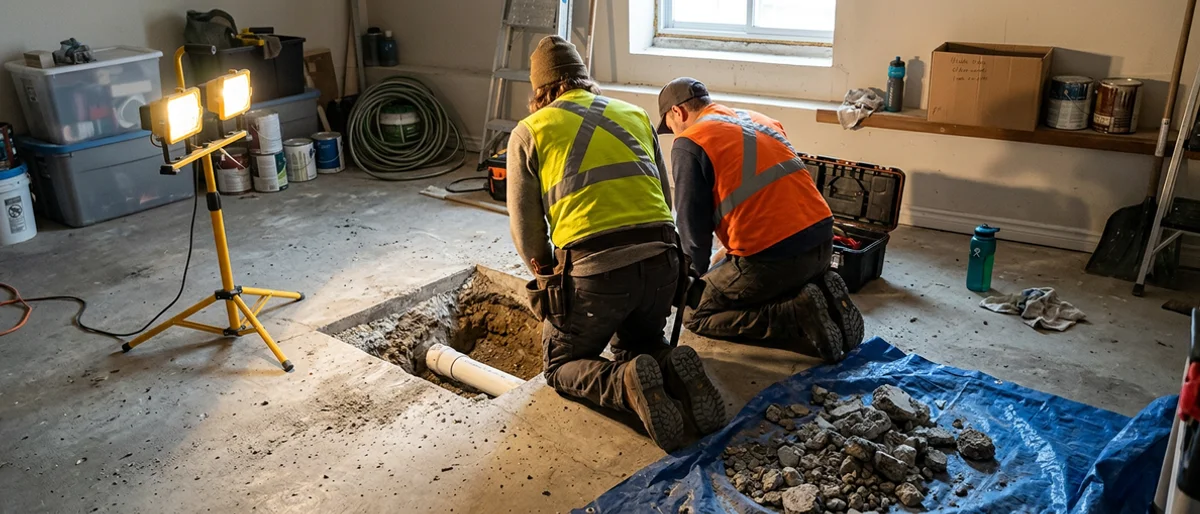
Backwater Valve Installation Toronto installs interior backwater valves in a pit under your basement floor, the method we use on most Toronto bungalows, semis and two-storey homes. A licensed plumber pulls the City of Toronto drain permit, saw-cuts the slab with a dust shroud, sets a City-approved valve on the building drain, and backflow-tests it before the floor is closed. Then we file the Toronto Basement Flooding Protection Subsidy so up to up to $1,600 per valve comes back to you, or up to $6,650 with a sump pump. After 17 years and 2,400+ installs, an interior job is usually one day on site.
Interior installs run $1,800-$3,200 per install before the rebate (2026 pricing). We spec Mainline MBV, Mustee Flood-Fix, Zurn Z1095 or Watts BV-100 valves, with normally-open flapper or dual-flapper configurations depending on sewer lateral depth and risk tolerance. Every install includes drain permit coordination, backflow test certification to CSA B64.10, City inspection booking, and rebate paperwork on post-war bungalows, split-levels and century semis across North York, Scarborough, Etobicoke, Toronto East, Toronto West and the rest of the GTA. Written 2-year workmanship warranty, WSIB coverage, $2M CGL.
Up to $1,600 per valveRebate
Up to up to $1,600 per valve Back on an Interior Install
City of Toronto Basement Flooding Protection Subsidy filed for you. Add a sump pump for up to $6,650.
The crew will call you shortly to book your free assessment.
17 Years of Toronto Backwater Valve Experience
Backflow Certified to CSA B64.10
WSIB Registered, $2M CGL
2,400+ Installs Completed
Engineering Specifications
From Slab Cut to Sign-Off: 5 Stages of an Under-Floor Valve Install
Every interior install follows the same five stages, scoped to City of Toronto building standards and CSA B64.10.
Pit Excavation and Preparation
Pit excavation starts with a dust-shrouded diamond-blade saw cut directly over the building drain, usually a 24 by 36 inch rectangle placed where the camera scope shows the sewer lateral leaving the house. We break out the slab, haul the concrete away the same day, and dig down through fill and Toronto Leda clay to expose the pipe, typically two to five feet deep. Leda clay holds water and slumps, so we keep the walls tight and work quickly. The pit is sized so the valve sits at the correct fall with room for a cleanout riser. Footings stay untouched. Your rebate eligibility is confirmed before the first cut, so nothing here puts the $1,600 per backwater valve BFPSP subsidy at risk.
Backwater Valve Model Selection
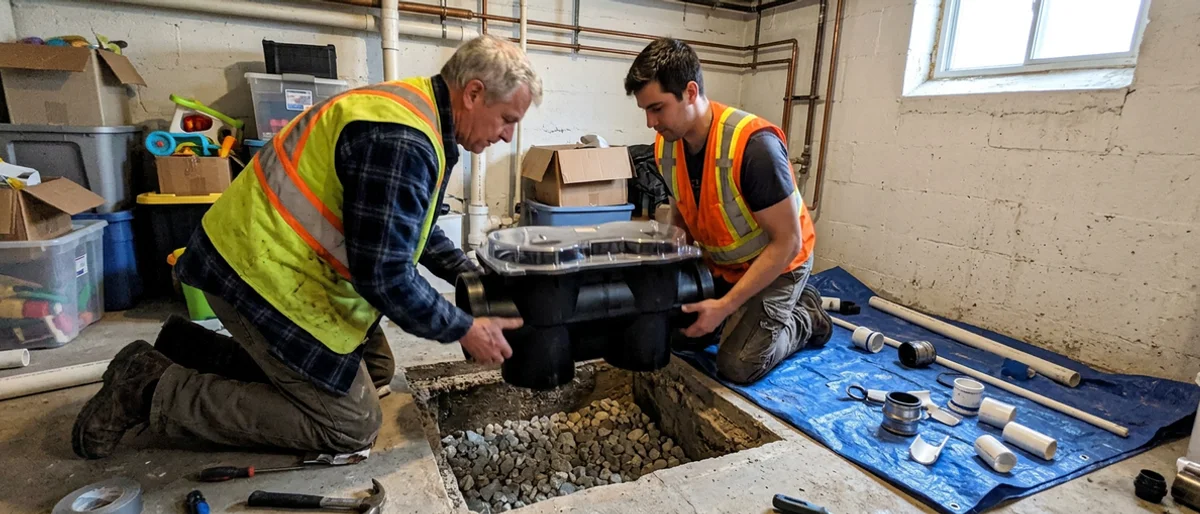
Backwater valve model selection depends on pipe size, lateral depth and how much surge your street sees. We install City-approved Mainline Backwater Valves, Mustee Flood-Fix and Zurn Z1095 units certified to CSA standards. A Mainline normally-open flapper is our default because it lets the drain and vent stack breathe freely, then closes the moment sewage tries to flow backward. Homes with repeat floods or finished basements often step up to a dual-flapper body for a backup seal. We size every valve to a 4-inch or 6-inch lateral, matching SDR 35 or CSA B181.1 PVC on both sides. A clear polycarbonate inspection cover lets you see the flapper without opening anything, and every model we use qualifies for the subsidy.
Backflow Testing and Certification
Backflow testing proves the valve actually closes and holds before the pit is buried. We plug downstream, introduce water to simulate a sewer surge, and watch the flapper seat against its neoprene gasket with zero reverse leakage. Then we run water from the house side to confirm normal drainage and venting. The result, valve model, serial number and photos of the sealed chamber go into a test record that we hand to the City plumbing inspector and keep on file for your insurer. Some installers skip this step. In our opinion that's the costliest shortcut in the trade, because an untested valve can void both the manufacturer warranty and the City of Toronto subsidy.
Concrete Patching and Finish
Concrete patching and finish restore the floor so you can walk on it within about 48 hours. We bed the valve body in 3/4-inch clear stone, which drains well and cushions the pipe against shifting clay, then compact it in layers up to slab level. A high-strength concrete patch goes in next, keyed to the old slab and hand-troweled flush. Hydraulic cement seals the riser joint. The bolt-down inspection cover is templated level with your finished floor, whether that's bare concrete, vinyl plank or tile. You end up with a neat rectangle and a cover you can lift for the annual check. The patch carries our written 2-year workmanship warranty.
Permit and Rebate Documentation
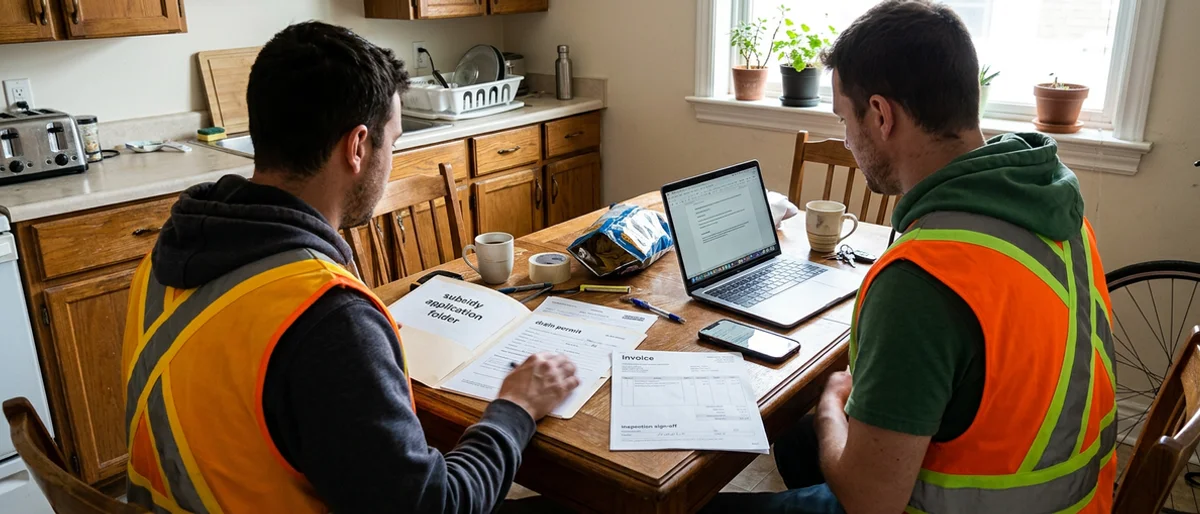
Permit and rebate documentation is where most DIY claims fall apart, so we handle every piece. Before cutting, we apply for the City of Toronto drain permit through Toronto Building. After the backflow test, we book the City plumbing inspector and meet them on site. Once the inspector signs off and your invoice is paid, we assemble the Basement Flooding Protection Subsidy packet: the zero-balance itemized invoice, drain permit number, inspection result and our licensed plumber details. We submit it and track it. Homeowners usually recieve the cheque 6-8 weeks after submission, up to up to $1,600 per valve for the valve, or up to $6,650 BFPSP total if a sump pump went in on the same job.
5 Signs Your Toronto Basement Needs an Interior Backwater Valve
If any of these sound familiar, an interior backwater valve is worth a free assessment.
Water has come up through the floor drain before. Once a basement has backed up, the sewer has shown you it can. A Mainline Fullport Backwater Valve on the building drain closes before the next surge gets in.
Your street flooded during the last big storm. Toronto’s older neighbourhoods, from Leslieville and Riverdale to the Junction and Roncesvalles, run on combined or overloaded sewers. When the neighbours are pumping out, your lateral is under the same pressure.
Your insurer sent a letter. Many policies now ask for a valve before renewing sewer backup coverage after a claim. Our insurance claim installs come with the paperwork underwriters want.
You’re about to finish the basement. Installing the valve before drywall and flooring go in is cheaper and cleaner. The cover can be planned into the floor layout.
A home inspector flagged it. Buyers and their inspectors now look for a valve and an upstream cleanout. A missing or failed valve is an easy negotiating point against you.
Is Cutting the Basement Floor Worth It? Interior vs Exterior Backwater Valves
In our opinion, yes, for most Toronto homes, from 1960s split-levels in Willowdale to post-war bungalows in Agincourt. An interior pit keeps the valve inside where it stays warm, it’s easy to reach for the annual check, and the job is usually done in a day. You give up a small rectangle of slab, and you get it back as a flush, bolt-down cover.
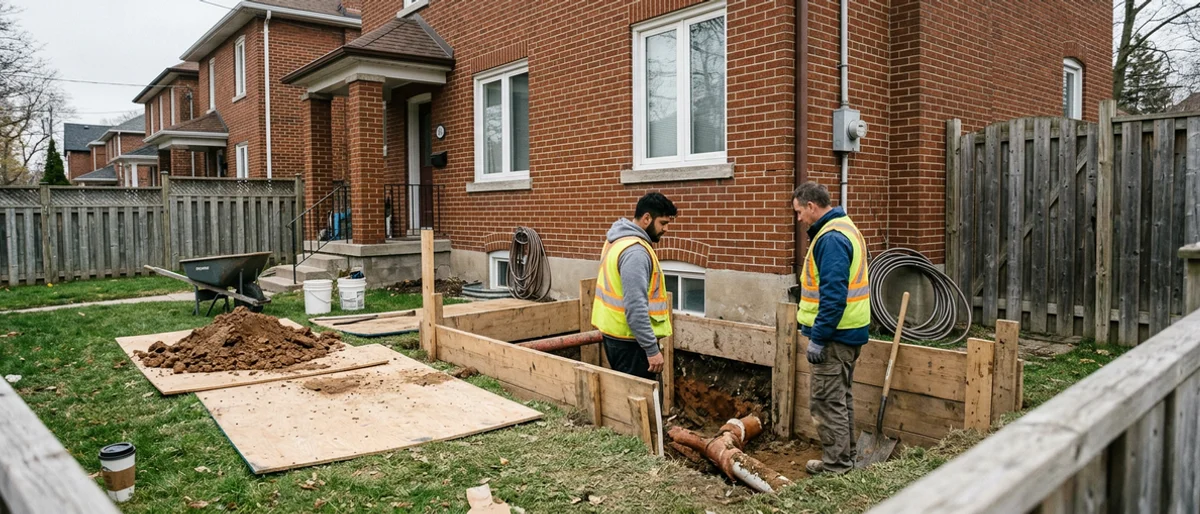
An exterior backwater valve installation makes more sense when the lateral runs very deep, the basement is finished with flooring you can’t replace, or there’s no practical way to reach the building drain from inside. It costs more, $2,500-$4,500, because of excavation, frost-depth risers and yard restoration, and winter digs add time.
Interior pit install
Exterior dig
Valve access for the annual check
Lift a floor cover indoors
Riser cap in the yard
Winter installs
No frost or frozen-ground delays
Slower digging, frost-depth riser needed
Restoration
Concrete patch, walkable in about 48 hours
Sod, interlock or driveway rebuilt
City of Toronto subsidy
Up to up to $1,600 per valve
Up to up to $1,600 per valve
Both methods qualify for the same up to $1,600 per valve from the City of Toronto rebate. The Backwater Valve Toronto Crew confirms which one fits with a sewer lateral camera scope at your free in-home drain assessment. If you want extra protection, a dual flapper valve goes in the same interior pit.
Why Toronto Homeowners Trust Us
Why Choose Backwater Valve Toronto for Interior Install?
Seventeen years and 2,400+ installs across North York, Scarborough, Etobicoke and central Toronto.
1 City Rebate Expertise
We file the Basement Flooding Protection Subsidy on every interior install at no extra fee and track it until the cheque arrives.
2 Licensed Toronto Plumber
Every pit is cut and every valve is set by a licensed Toronto plumber, with ECRA/ESA trades where a sump circuit is involved.
3 Backflow Test on Every Valve
Certified to CSA B64.10. We test under load before the floor is closed, so the warranty and subsidy both stay valid.
4 Clean, Contained Cuts
Dust shrouds, sealed work areas and same-day concrete removal. Most homeowners say it was less mess than they expected.
5 Published CAD Pricing
$1,800-$3,200 is posted right here, with the factors that move your number. No gated quotes and no surprise extras.
6 Written 2-Year Workmanship Warranty
The cut, the patch, the tie-ins and the valve install are all covered in writing, on top of the manufacturer warranty.
Zero Hassle Process
How Our Interior Install Process Works
How The Backwater Valve Toronto Crew protects your basement and files your City rebate.
Step 1
In-Home Drain Assessment and Camera Scope
We inspect the main drain, find where the sewer lateral leaves the house, check slope, and confirm whether the pipe is clay, cast iron or PVC. We also confirm your subsidy eligibility. The visit and camera scope are free.
Step 2
City of Toronto Drain Permit
We apply to Toronto Building for the drain permit on your behalf before any concrete is cut. No permit means no subsidy, so we never skip this step.
Step 3
Interior Pit Excavation or Exterior Dig
Dust-shrouded saw cut inside, or a shored excavation at the property line outside. The valve is set on 3/4-inch clear stone bedding with cleanout access.
Some installers skip the backflow test, which voids both the warranty and the subsidy. We test every valve under load.
Step 4
Valve Installation, Backflow Test and Mitchell Harrington Quality Review
We backflow-test the new valve, record the results and photos, and founder Mitchell Harrington reviews the test documentation and CSA B64.10 compliance before the pit is closed.
Step 5
City Inspection and Rebate Submission
The City inspector signs off, then we file the Basement Flooding Protection Subsidy paperwork. The cheque typically arrives 6-8 weeks after submission.
Want a written price for interior install before you commit?
The assessment and camera scope are free. You see the CAD price in writing before any work starts.
How Much Does Interior Backwater Valve Installation Cost in Toronto?
An interior backwater valve installation in Toronto costs $1,800-$3,200 CAD before the rebate (2026 pricing). Most bungalows and semis with a shallow drain and bare concrete floor land in the lower half. Deeper building drains, thick slabs, finished flooring and clay laterals that need a joint repair push the price up.
After the City of Toronto subsidy returns up to up to $1,600 per valve, a typical $2,600 install costs you about $1,350. The drain permit fee, backflow test, inspection booking and rebate paperwork are all part of the quoted price. If you want a rough number before we visit, the cost estimator gives a net-of-rebate range in under a minute.
What affects the price
How it moves your quote
Building drain depth (2-5 ft)
Deeper pits take longer to dig and shore in Leda clay.
Slab thickness and floor finish
Tile or vinyl plank adds careful removal and cover templating.
Pipe condition at the tie-in
A cracked clay joint found on camera is repaired first.
Lateral size (4-inch or 6-inch)
Larger valves and couplings cost more.
Published Price
Interior Install$1,800 - $3,200
per install, before rebate
Eligible for up to up to $1,600 per backwater valve Toronto BFPSP subsidy
✓Dust-shrouded diamond-blade saw cut and concrete disposal
✓Mainline MBV, Mustee Flood-Fix or Zurn Z1095 sized to a 4-inch or 6-inch lateral
✓Certified backflow test and City inspector sign-off
✓Flush concrete patch with bolt-down inspection cover plate
Group crew photos from real Toronto basements and property lines. Tap any photo to enlarge.
Customer Proof
What Customers Say About Our Interior Install
★★★★★
"They cut the floor on a Tuesday and the patch was dry enough to walk on by Thursday. Cover plate sits flush with our vinyl plank and the permit and inspection were booked for us."
Lena M., Bayview Village
Interior install $2,650 CAD
★★★★★
"Our 1958 bungalow had an old clay lateral. The camera scope found a cracked joint first, so they fixed that and set the valve in the same visit. Rebate forms went in that week."
Tom R., Don Mills
Interior install $3,100 CAD
Clear Answers
Interior Install FAQs
How much does an interior backwater valve cost in Toronto?
An interior backwater valve costs $1,800-$3,200 CAD before the rebate in 2026, depending on building drain depth, slab thickness and floor finish. Up to up to $1,600 per valve comes back through the City of Toronto Basement Flooding Protection Subsidy, which we file for you, so a $2,600 install nets out near $1,350.
Do I need a permit to install a backwater valve in Toronto?
Yes. The City of Toronto requires a drain permit through Toronto Building and a City plumbing inspection for every backwater valve, and the subsidy is only paid with both on file. We apply for the permit before cutting and book the inspector after the backflow test.
How much dust and mess does cutting the basement floor make?
Very little. We use a dust-shrouded saw with extraction, cover the work area and haul out all concrete and soil the same day.
Which backwater valve brands are installed in Toronto basements?
We install City-approved Mainline MBV, Mustee Flood-Fix, Zurn Z1095 and Watts BV-100 valves, sized to a 4-inch or 6-inch lateral. A Mainline normally-open flapper is our default, with a dual-flapper body for homes with repeat floods.
Can a backwater valve go inside a Toronto heritage home?
Yes. In The Annex, Rosedale and Cabbagetown an interior pit under the existing floor is often the only viable option, and we plan the cut around finishes and old drain stacks.
How long does an interior backwater valve installation take?
One day on site for most homes. The concrete patch is walkable in about 48 hours. Permit lead time and the City inspection add a few days on either side.
Where is a backwater valve installed in a basement?
On the building drain after the last fixture, usually near the front wall where the sewer lateral leaves the house. We confirm the exact spot with a sewer lateral camera scope and sonde before marking the floor.
Will the inspection cover be in the way?
No. The bolt-down cover sits flush with the floor, so you can walk, roll furniture or lay a rug over it. You lift it once a year to check the flapper.
Do I need to be home during the install?
Only at the start and end. We need access to the basement and water shut-off, and we walk you through the cover and test results before we leave.
Can you install an interior valve under a finished floor?
Yes. We remove only the flooring over the pit, keep the pieces where possible and set the cover level with your finish. If the floor truly can't be cut, we look at an exterior install.
Still have a question?
A licensed plumber can answer it on the phone or at your free assessment.